Showing posts with label food. Show all posts

Tuesday, August 16, 2011

Getting to Thailand: planes, trains and automobiles.

Minus trains, I am pretty sure Christy and I used almost every form of transportation we possibly could've to get to Koh Samui, and passed through neighboring cities and countries along the way. Oh, and we learned some amazing lessons too.

From Seoul, the trip started early in the morning as we took a flight with the cheapest airline possible (AirAsia-- not the nicest, but definitely the cheapest) through Kuala Lumpur, Malaysia and then onto Phuket. Aside from the extremely cold conditions of the airplane (causing us both to go into tourist hypothermia and hide under our blankets like fuzzy scared blobs), we also had the joy of experiencing some amazing turbulence that caused our plane full of Korean passengers to go into a screaming fit. At first, we thought this was due to the same panic we were feeling but later overheard the Korean expression for "How fun!". Some even went so far as to pretend they were on a roller coaster. In the middle of the sky. During dangerous turbulence.

Annnnnd this is why I'm going on vacation.

Once arriving in Phuket, we swam through the sea of tour agencies and cabbies to find a good deal on transportation to our hostel. A tip about transportation in Thailand: barter. Barter til you're blue in the face. Set your maximum price and stick with it, and you will find a good deal. Our hostel owner (Ananas Phuket Hostel) even bartered lower upon arrival at the hostel because she thought we were paying our young, fairly inexperienced driver too much.

The next day, we were off again on a 6-hour bus ride that finally let out on the other side of the southern arm of Phuket, namely Sura Thani. Our hostel also helped us set this up so that the bus ride was not only safe and reliable, but transferred directly to the ferry dock. From there, it was a 2-hour ferry ride to Koh Samui. Now, this is the low season for tourism because of tropical storms. We had our first encounter with a storm that night with rain so hard it forced itself through our cabbie's driver-side door. Fortunately, our next hostel is also extremely well-kept and we won't be worrying about any rain leaks while staying on the island.


The island of Koh Samui is pretty large, but the beach we are staying at, Chaweng, is made basically for tourists and will only hold our attention (and budget) for a couple days. All in all though, this place is heaven and we are thoroughly enjoying the fresh fruit, sudden rains, coconut juice, morning beaches and-- of course-- the cheaper-than-dirt shopping.

I'll keep you all updated at we continue along. Next stop-- Chiang Mai, Thailand's 2nd largest city.

-Laura and Cheengu
Share |

Wednesday, June 15, 2011

Hope in sight for all us veggies in a veggie-less world.

Among the laundry list of things that makes me different from Koreans is the fact that I came here vegetarian.

..."came here vegetarian" being the operative phrase.

I found it really difficult to go by without eating meat here. Even things that seem to not have meat in them will often come with diced ham or other little shreds of beef. I can't tell you how many times I've had this conversation with a local (in both English and Korean):


Me: Does this have meat in it?


Waiter/co-teacher/Shop owner: No, do you want meat?


Me: No. Please no meat. I don't eat meat.


Waiter/co-teacher/Shop owner:  ...................


Me: (pointing to menu or saying the name of the dish over and over and making a huge 'X' symbol with my arms) This, meat, no. Meat, no. Meat... NO.


Waiter/co-teacher/Shop owner: Ok, ok.

... and 15 minutes later, I have a wonderful dish of meat-filled food.

My reasoning for not eating meat is multi-faceted, but the main pillar is because of factory farming (by the way, if you are reading this and haven't watched Food Inc. yet, you are virtually and morally obligated to do so by the end of the week). I asked my co-teachers about what countries export their meat to Korea, and was disappointed to find that the US is on this list. In short: the factory-farmed meat I want to avoid in the States is now travelling a further distance than before, makng it even less sustainable than it already was.


Although I do know (and seriously commend) a few vegetarians living here as foreign teachers, the fact is that, for me, I would be less comfortable eating absolutely NO meat because of my school staff and Korean friends. Sometimes, there is no meat-less option, and at least by eating chicken I have the ability to chew on something whilst sitting around with those who have a full pallete to work with. This is not my country. For me, it just seems polite.

A bummer? Sure. I would rather be vegetarian. And sometimes I even feel a little frustrated about what I  can only refer to as being "force-fed meat" (see the example conversation, above). But sometimes that's part of cultural competency, especially in a professional atmosphere. It wasn't a choice I was thrilled about, but since I have only been vegetarian for a couple years, it was a change my body could make to better adapt to the life I have here.

However, I did find this yesterday, through a fellow foreign teacher, and thought it was definitely worth sharing:

Aeris Kitchen is a recipe blog that has a Korean cooking component for [lacto ovo] vegetarian dishes. Despite the content of this post, I do want to make it clear that there are vegetarian options here on occasion, and they are pretty basic (and thus easy to make). Aeris Kitchen makes it easy to find and re-create vegetarian Korean dishes, whether you are living abroad or back at home. I know I'll be using it when I go back to the States.


UPDATE ON THE VEGGIE FRONT: I don't know what to say, but after TEN months of being at my school and eating in the cafeteria daily, today my co-teacher decided to tell the lunch ladies I don't eat meat. Today. Right before I went to publish this blog post. I had just been eating around the meat and giving the extra to the school staff (very Korean, I know), but now the lunch ladies are replacing my meat with extra veggies. On today of all days. Sometimes, the 'ask and you shall receive' thing totally applies.
Share |

Monday, June 13, 2011

Summer just wouldn't be summer without it.

I wanted to write a haiku in honor of this weekend delight, but honestly there is too much going on here to fit it all into a 5-by-7-by-5-syllable format.

No. This is something completely out of all of our leagues.

Let me introduce you to the traditional Korean summertime snack, 팥빙수 (or pat-bing-soo).


Now, upon first look, I kind of wanted to run away. In a typical dish, one could be subject to find:
ice
red beans
fruit
random jelly
rice cake
cereal flakes
and some kind of sweet milk.

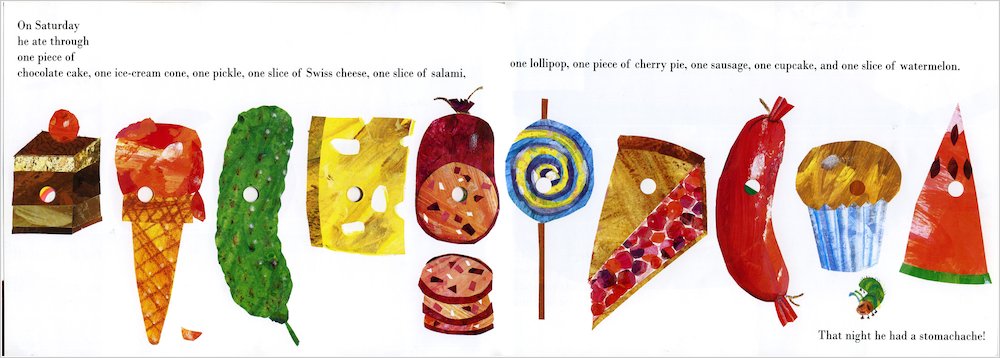
To me, it sounds like something the Very Hungry Caterpillar would fantasize about, but it's really just the typical snack Korean use to cool off on those very hot summer days.

This weekend, I knew it was time to girl-up and find me some pat-bing-soo, if for no other reason than to write a blog about how much it weirded me out.

Maybe I've been here too long and will accept red beans in and on anything, but I actually really enjoyed sitting on the floor of my apartment, windows open, eating this thing. And-- even better: since it's not ice cream, I felt absolutely no guilt for eating it all... even if the lady I bought it from did  ask me if I wanted two spoons.

With that mystery solved, it's good to know I can walk down the blazing hot streets of my Korean summer no longer in fear.
Share |

Sunday, April 10, 2011

A haiku in honor of my afternoon snack, V.

There's so much to say.
Ice-cream-rice baby.
And don't forget beans.


I've heard of meshing cultures before, but this is pretty literal. Rice cake snacks are very popular in Korea, filled with red bean paste (what would be the green and brown layers in the concoction above). The other 2 layers (innermost and outermost) would be ice cream and waffle cone.

At first, I was scared, but it turned out to be okay. Or maybe it's because I've been here for 7 months and, like this ice-cream-rice baby waffle snack, I too am becoming a mixture of Korean and Western culture. Hmm.
Share |

Friday, March 11, 2011

"You use chopsticks very well."

Going out with Korean co-teachers is unlike any dining experience I've ever had.

I don't just mean that in Korea's professional world, it's perfectly acceptable to knock back a few beers or some Soju with your co-workers and hit up the 노래방 (norae-bahng, or singing room) for a little karaoke into the early hours of the morning. Korea tip: if you are ever at a 노래방 with your Korean friends or co-workers, singing anything by ABBA will send the room into a happy, drunk frenzy.


What I'm about to illustrate is a typical dinner night with my co-teachers:


5:20pm- The time dinner is slated for.

6:15pm- The time we get to the restaurant. I want to stress that this is not because Koreans view time as a relative thing (this is not a "it'll get done whenever" culture); this is simply because most of the Koreans I know are so busy I don't actually have proof that they sleep.

6:16pm- We sit at a table with about 2357809 tiny side dishes (mostly vegetables hidden among spicy sauce; sometimes they are unidentifiable as vegetables; sometimes that's because they're meat). As the youngest at the table, I am culturally supposed to pour the water, but I usually don't get the chance (or, yes; sometimes I forget). Food is ordered and I'm never sure exactly what it will be.

6:18pm- The conversation switches between fast-paced Korean, with lots of gestures, laughter, and what I can only describe as 'Korean sounds' (often crucial to story-telling, I'm sure... I just never know what any of it means). I try to follow along but sometimes feel awkward paying complete attention to a conversation everyone knows I don't understand. This is when I analyze the 2357809 side dishes and pick at the less meat-looking ones with my chopsticks.


6:25pm- The conversation breaks from Korean as a co-teacher turns to me and asks,
"So Laura-- what did you have for breakfast today?"
"I had cereal."
"With milk?"
"Yes; with milk."
Somehow, this is incredibly funny.

6:27pm- The conversation resumes in Korean. I practice with my chopsticks again. Before I came to Korea I thought I was pretty good at chopsticks. Since living in Korea, I've seen things done with chopsticks I never thought imaginable. And I still can't cut cabbage kimchi with 'em. Damn.

6:30pm- The main course arrives. I'm already full from the side dishes. Maybe this wouldn't have happened if I spoke more Korean.

6:46pm- We finish the main course and I think I'm about to burst. I hear my co-teachers order rice and soup. I always forget about that sneaky post-meal-meal.


7:00pm- We finish dinner and my co-teachers notice there's no coffee machine in the restaurant (which is standard for a lot of Korean restaurants). This can only mean one thing:

7:03pm- We get in the car to drive to a coffee shop. At 7 o'clock in the evening. Maybe they don't ever sleep.

7:05pm- We order coffee and the conversational pattern continues between Korean (some of which I can understand and surprise both myself and my co-teachers when I laugh at the appropriate times) and a slow-paced English conversation where I break so many grammatical laws that my friends at home would never believe I teach this language to children.

7:45pm- We head out. Teacher dinners are always fun and interesting for me, but honestly I'm glad when I can be home before 9pm this time. Usually, when foreign teachers go out with staff, it's an all night affair.

For anyone who is ever nervous about dining with their staff-

  • Don't be. They know you are out of your element.
  • Remember that you are not only a teacher, but the school jester. Let them be entertained by you.
  • Try. Try the food. Try chopsticks. Try the alcohol if it is offered to you. Just try.
  • Never accept anything from another person with your left hand; use both hands, or if you only have one hand free, make sure it's your right hand. Never offer anything with your left hand, either.
  • Be content people-watching if you can't join in on the conversation. Or practice with your chopsticks.

Unless you can already cut kimchi and fish. In that case, I might be asking for your assistance.
Share |

Wednesday, March 2, 2011

Shanghai'd.

And not the slang interpretation.

After a whirlwind adventure, it is with great pleasure that I give you a full briefing on my adventures in Shanghai, China, with tips galore for both the photographer and the traveler. Here are some highlights from my 6-day excursion:

Dumplings galore.

When Westerners think about Chinese food, we think of pork fried rice, sweet and sour chicken, and fortune cookies. If you're reading this because you want to travel to China for any of these dishes, it would be less expensive to go to your local Chinese buffet and grab some all-you-can-eat lunch, because local Chinese food is nothing like that.

With that said, the food in Shanghai was pretty excellent.

 It's easy to eat cheaply in China-- even Shanghai, one of the major cities (it's also easy to eat expensively, but what fun is that when all the traditional food is so inexpensive?).

Some of my favorite cheap eats were in the form of dumplings (called 'mandu' in Korean, but unsure of the name in Chinese). These beauties are hot, steamy, and the size of your fist. Usually stuffed with meat, but sometimes with spinach or veggies with curry sauce. You can find them at local hole-in-the-wall vendor stalls, or in most convenience stores near the cash register. Heaven.

Similarly, Jaozi (jout-za) is very local, cheap, and delicious. Over-sized pot-stickers, these morsels are as cheap as 1 yuan a piece (that's about $0.15 USD!).


Other notable food resources would include the many fresh fruit stands all around the city. If you're in the market for some apples or bananas, hit up one of these stalls for a good deal.


City Central Youth Hostel.

We struck some traveler gold when selecting City Central Youth Hostel. It was clean, organized, and tons of fun! For about $6USD per night, we had access to dorm room suites, clean showers (with hot water), and a host of other amenities that came in the form of cushy couches and free breakfasts. The CCYH also has its own restaurant/bar where the food is affordable (not as cheap as the Jaozi, but what else on earth is?!) and-- most importantly-- delicious. We met tons of fun folks there (mostly Brits; what a lovable crew!) and with only a 20 meter walk to the nearest metro stop, it was easy to explore the city. 5 stars for this rockin' place.


Pedestrians: not the most respected part of city travel.

One of the times I've been most concerned for my life is in a crosswalk in Shanghai. A warning to all ye who dare to cross the street there: look left, look right, and keep looking as you dodge your way in and out of traffic like the way you'd dodge bullets in the Matrix. There is little, if any, respect for human safety on the streets, and with the amount of motorcycles on the road, it's not uncommon to get caught in a swarm of them!

Fortunately, there are a few common heroes out there, enforcing traffic safety laws. Chinese officers in highlighter yellow jackets patrol many a street corner, and according to reliable sources aren't afraid to jump in the way of moving vehicles to keep people like us safe. So practice your "xie xie" (that's shey-shey or 'thank you') when you see one of them saving your butt from the guy on the moto carrying 2 refrigerators behind him.


What do you get when you mix blaring pop music, too many security guards and no dance floor?

I'm not sure, but you can know you're definitely at a Chinese club. What you are sure to get is a security officer scolding you for taking photos, hoards of old men playing dice games, and maybe some dancers impersonating Justin Beiber (if you were to be so lucky). Definitely not the Westerner's scene, but it does make for a cultural experience.

Yes, I was actually scolded for taking this obviously high-resolution picture of people doing NOTHING in this club.

Shanghai is known for its 'all-you-can-drink' nights at clubs around the city, but unless you're going to start and end your night all in one place (or if you like binging yourself into an alcohol-induced coma of stupidity), then you might be better off grabbing some beers at a pub or-- cheaper and easier to find-- a local convenience store. 


Places to see.

Jin'an- This district is large and includes some of the places listed below but the main attraction you should see in this area is the Jin'an Temple (off of metro Line 2). If not for the history its endured, then for the shiny gold lions and roofs.


The French Concession- I didn't know that Shanghai would have anything resembling France in its city limits, but the French Concession is actually quite beautiful. Take a stroll to see the architecture, eat some local food, and enjoy the scenery of tree-lined streets (where you may or may not see people hanging their clothes to dry...). European charm on the outside, pure China on the inside. Mmmm, nougat-ey.

 
People's Square- People's Square is directly between Jin'an and the Bund. For anyone who loves the feeling of big open parks, fountains, or seeing kids flying kites with their adorable grandparents, this place is a must-see. Pack a picnic and take a stroll (or hop on the metro if you're not looking for something quite that idyllic).


The Bund- The Bund is also full of old European charm. Right along the Huangpu River, this area is full of fun shops (albeit the more expensive ones), ferries, and the gorgeous view of the Pearl Tower. Just take metro Line 10 and get off at Nanjin Road East.


Pearl Tower- Seattle has the Space Needle, London has Big Ben, and Shanghai has its Pearl Tower. This is a site worth seeing, of for no other reason than to know that its the trademark of one of the largest cities in the world.  Don't feel pressured to ride up to the observation deck, but if you want to get close to the tower, hop on a ferry for a couple yuan and cross over to the other side.


 The Stupid Tunnel (cleverly named by a friend who said it was 'so stupid, it was actually kind of cool.')- If you really want a different experience, take the tourist tunnel under the river to get to the tower. Just know that you're entering a tourist trap that will leave you feeling like you went through an offshoot of some Willy Wonka ride. Oh, and (of course I would suggest this) bring your camera.


Old Town- The Old Town district, also off Line 10 of the metro, is a great stop if you'd like to see a little of traditional Chinese market culture and the reinvention of Chinese market culture. Old Town has them both. If you're clever, you can find metal trays of bloody fish heads and beautiful rows of red lanterns withing a 30-minute walk of one another. Now that's culture.


Completely subjective: from the eyes of one traveler.

Compared to Korea, China was-
  • louder.
  • dirtier.
  • fatter (and by that I mean average-sized).
  • more confident.
  • more rude.
  • more organized.
  • cheaper.
  • better at English (both in speech and advertising).
  • equally helpful.
  • equally strange.
  • equally delicious.
  • less concerned with being so flippin' cute.
  • still in love with Hello Kitty.
  • warmer, but not warm.
... but you should really go figure this stuff out for yourself.
Don't take my word for it.

Some travel logistics:


So what about the Internet?

Due to China's ban on many different websites, social networking, video streaming, and other various sites are not readily available in China. In order to access these sites, you will need to get a VPN shield or use a proxy server. Free proxy servers are hit-and-miss because China's government is constantly taking them down (so something that may have been usable at one point could be gone in a matter of hours), but they are available here and there if you really can't live without your Facebook or equivalent. If you are staying in China for a while and want something reliable, it would be in your interest to do some research and find a decently-priced proxy server that will allow you to access the sites you're looking for. 

Dirty fun.

It only takes a Google images search to see that Shanghai has an incredible amount of smog. If you are going to be staying in Shanghai for more than a week or so, you may want to invest in a face mask for those days when air pollution is particularly high.

On a similar note, don't drink the tap water under any circumstances. Bottled water is easy to come by (don't spend any more than 2 yuan for an 8 oz. bottle), but if you're running on a tight budget, you may want to consider getting a pump-operated water filter.


"Would you like a shopping?" and other scams.

Even though Shanghai is a densely-populated city, foreigners stick out like sore thumbs and are thus perfect targets for scammers. In Shanghai, there are lots of different scams. Many times, people will approach you on the street or in markets and tell you they want to show you around (to an art gallery, tea shop, or something else entirely), only to take you to a shop and make you pay tons of money on site.

To make sure you don't fall prey to these scams, the best thing to do is to just say no to all offers like this you see, even if the person seems very kind and genuine.

If you encounter someone who is particularly aggressive, you can simply use the phrase "búyào" (不要), which means "don't want". It's a fairly strong statement and gets the point across.

&

Last-but-not-least-ly:

Complete credits to an amazing travel partner, interpreter, and adventurer, who happens to run a video blog called DisOriented Travel. You should really check it out sometime if you want tips on how to travel cheaply in Asia, want to learn about backpacking, need tech tips, or are just generally in the mood to be entertained by a mild-mannered, humorous guy on an epic adventure abroad. It's worth your time either way.


Happy travels!
Laura and 친구
Share |

Saturday, January 29, 2011

Happy Seolnal! 설날

Pop Quiz! Here's a little cultural analogy for you when comparing Korea and the US:

Chuseok : Thanksgiving :: ___________ : Christmas

a) Easter
b) Buddha's Birthday
c) my birthday
d) Seolnal

For those of you who answered d), pat yourself on the back! (And for those who suddenly had panicked flashbacks to the SATs, I apologize. But these holidays are definitely analogous, and thus worthy of an analogy).

In Korea, I already had the pleasure of experiencing the Chuesok holiday in late October. It is a time when families come together and remember their ancestors through Confucian practices (primarily; although Buddhist and newly-emerging Christian traditions are also a part of this holiday). Koreans often equate this to a traditional US Thanksgiving (although our history is quite a bit different).

Seolnal (설날) is the Korean term for "Lunar New Year," which is on February 3rd this year at the start of the Lunar calendar. In Korea, the Solar New Year (January 1st) is also celebrated, but not on nearly as large of a scale. When I asked my co-teacher to describe how her Seolnal was going to look, she told me there would be family, a table full of food for their ancestors (a Confucian tradition), and they would play traditional Korean games. Sounds kind of like Christmas to me.

In December, I was feeling a hole in the traditional time line that are holidays because very few native Koreans honor Christmas as something meaningful (a very different vibe from the "Christmas spirit" I'm surrounded with each December). Celebrating a season when you are a minority is not as comfortable as when you are the majority (though I believe many things are less comfortable for the minority). All the same, now that it's Seolnal season, it's almost comforting to see this culture celebrate as one, even if I won't be celebrating with them.

Wait, does celebrating the end of Winter Camps count? 'Cause that should definitely be its own holiday. But I digress.

Anyway, this week, I got to see and experience some really thoughtful, completely traditional Korean gift-giving. Although Seolnal is about honoring your ancestors and elders (making gift-giving to everyone unnecessary), some people choose to give gifts anyway. Not wanting me to feel completely left-out or culturally-deprived, a couple of my co-teachers sent me presents:

a beautiful pencil case (in traditional Korean cloth),


and a whole box of delicious traditional Seolnal snacks for the new year. Such a kind gesture! In fact, there are so many that you may be seeing them again... in a haiku... three months from now.


Some of my students also gave me cards and snacks. Best excerpt comes from a very special student of mine:
"When you gave me some good words, I'm get energy! I'm very thank you about it."
Yeah; sometimes being a teacher is completely, no-strings-attached AWESOME.

Well, with 5-days of time-off for Seolnal, what will this waygook be doing, you ask? Sleeping and bumming around Korea (as time and holiday traffic allow) of course! Bring it on, New Year part II.


Happy Seolnal , everyone!
Share |

Wednesday, January 26, 2011

A haiku in honor of my afternoon snack, iv.

What's this I'm seeing?
Not meat, but not chips either:
Chicken-shaped delights.


Okay, so maybe South Korea could fault the States for our dino-shaped chicken nuggets. But at least it's still chicken meat (kind of).
Share |

Thursday, January 6, 2011

A haiku in honor of my afternoon snack, iii.

Uncomfortable.
It says you are chocolate but...
I'm really not sure.


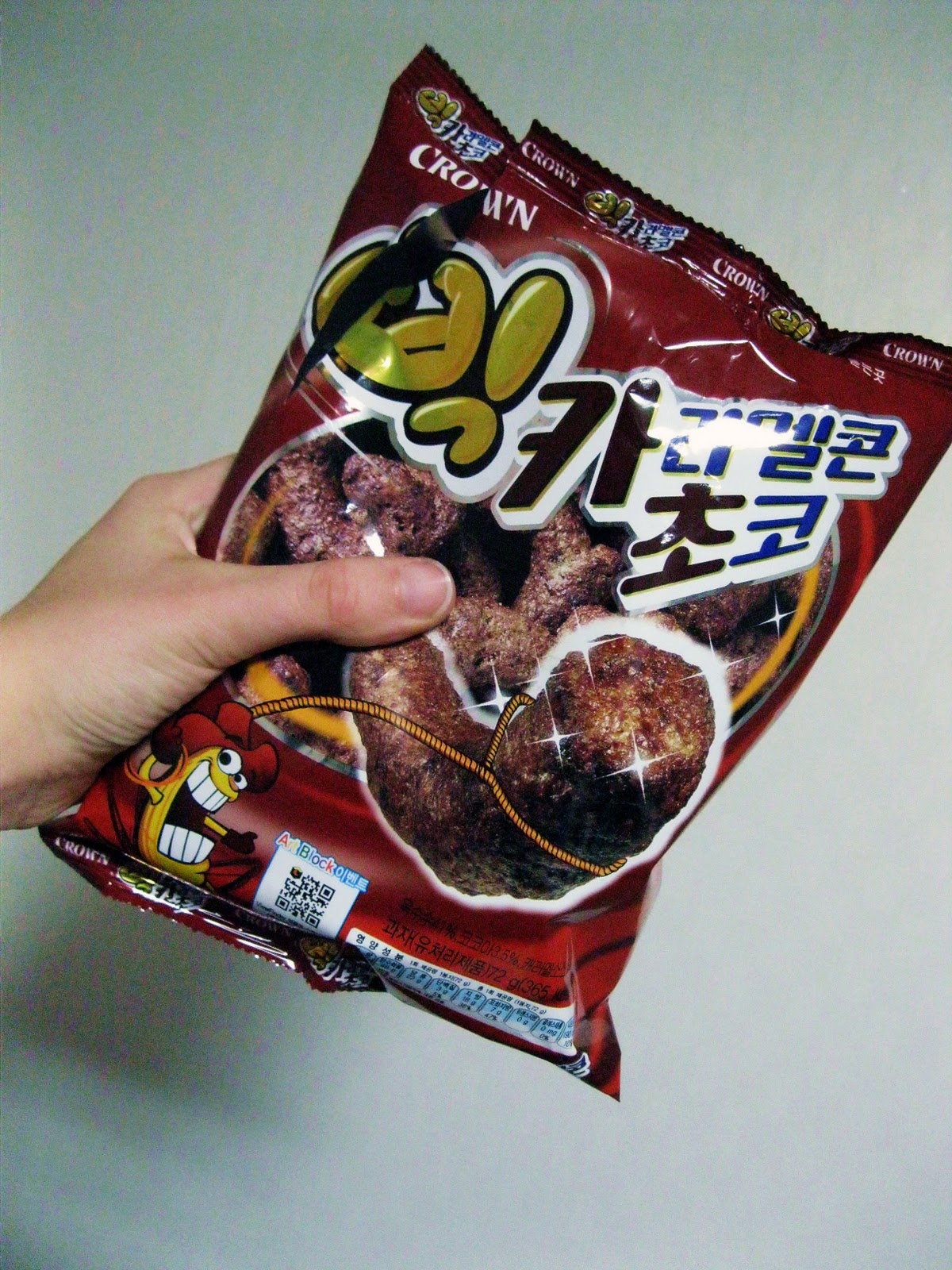
And here's a picture of the bag, just so nobody thinks anything funny is
going on.


The bag indicates that these are called, "Big Caramel Chocos." They have the taste of Count Chocula, but obviously the shape of something that crazy vampire would find in his toilet.

Yummy.
Share |

Tuesday, January 4, 2011

Finding my Seoul.

For the last week, I've been touring about Seoul, the capitol of South Korea with my travel backpack, camera, and trustworthy friends in tow. This trip was jam-packed and still we could spend so much more time getting to know Seoul. However, from what we learned and saw, Seoul is a city to be loved and experienced.

Instead of going chronologically through the day-to-day experiences of this whirlwind week, I'll break this down into highlights and try to give those travelers out there a good idea of some places to definitely visit in Seoul as well.


Speeding through Korea at 200mph.
Coming from Ulsan, approximately 600 km away, the fastest and cheapest way to travel to Seoul is by the highspeed train. A flight rivals this mode of transport only slightly, but with all the time it takes for security checks, the 2.5 hours by train to Seoul just makes sense. The KTX bullet train travels at about 200 miles per hour, which didn't feel as crazy as I thought it would, but was fun nonetheless. We got out to the train early, as our tickets said it only stops for 2 minutes! The KTX is definitely a commuter train. As for the company I kept during the ride, it varied from a huffy old man to a woman monk to a woman I practiced some Korean with. Despite my fascination with the woman monk (all women monks have shaved heads), there wasn't much to say... so mostly the KTX was for sleeping (as with almost all Korean public transportation).
Traveler's note: if you have a considerably large or heavy bag with you, be ready to hoist it up into the overhead storage. Some friends of ours put their bags in the space between the cars but there is no official space for it to go besides above your seat.


Germ-a-phobes, bring some wipes.
The subway system in Seoul is fairly easy to get a grip on, and considering the massive size of this city, we used underground transport a lot! The subway system got us through Itaewan, the Hongik University District, Jongno, Dongdaemun-- and much more-- in a timely fashion. As a foreigner and group of young travelers, it's uncommon to get seats in the subway, as we are obligated to yield to elders (and avoid the sections reserved for people who need them, such as those with children). So grab your sea legs and hop aboard! You'll see more of Seoul by subway.
Traveler's tip: if you're traveling in Seoul for more than a day or two, especially if you're touring the city, consider getting a subway card instead of single journey tickets. It'll save you tons of time and the stress of fighting old men for the ticket kiosk!


This is how the Korean University kids get down.
The Hongdae district of Seoul is home to Hongik University, cute hole-in-the-wall boutiques, excellent DVD bangs (I recommend 'Take 5'), cafes (there's even a Hello Kitty cafe!), and bars with names like "Boobi Boobi" and "S Club". It was an incredibly lively place to be, and only blocks away from our accommodation, so we definitely felt like we were at the center of everything we wanted in terms of food and nightlife. After visiting several cities, I feel comfortable generalizing that the typical social cycle in Korea is almost homogeneous across the country: everyone eats and drinks in the evening, drinks more after that, mixes in some dancing and karaoke after that (followed by more drinks), and are still partying strong when the sun comes up. At sunrise, many consider going home (although many choose to keep drinking and singing), and by noon or so the shops begin to open. In Hongdae the social scene was even more exacerbated because of the college atmosphere, so although it was a tad annoying to only eat at Tom n Toms (a 24-hour coffee chain in Korea) for breakfast most mornings, it was hilarious to see young Korean girls stumbling home at 9am, still drunk, in their heels and night outfits. Excellent job, Korea. Excellent.


"Laura, I just touched the Korean man's feet." --Emily
This was my first experience at a hostel, and based on the less-than-desirable accommodations, I consider myself courageous to say it won't be my last. We chose our hostel based on the supreme location to the university and art district in Hongdae, and the price was practically unbeatable. However, there was definitely a trade-off we weren't aware of! When we arrived at our stay, the conditions of the hostel came as quite a shock. On several occasions, many of us (girls and guys) actually opted to use the bathroom and even brush our teeth at our morning breakfast stop as opposed to the bathroom at the hostel. There is so much more I could share about our accommodations but am choosing not to because I don't want to completely shame its owners on a public blog. Instead, a word of advice: please heed the travel tip.
Travel tip: Do NOT book at Backpacker Friends in Hongdae district in Seoul, unless you are sleeping off jet lag and do not plan on showering, brushing your teeth, or eating on site. Really. Just don't.


LotteWorld.
With all the snow coating Seoul, we were glad that LotteWorld was available for a day of indoor fun. LotteWorld holds the Guinness World Record for largest indoor amusement park, so we knew we'd still be in for a treat even though we weren't outside. LotteWorld is definitely an experience unlike any other I've had in my thrill-seeking days. Although we didn't go on many rides, it was interesting to see how one would build an amusement park inside. There were water flume rides, a monorail, hot air balloon rides (monorail hung from the ceiling), rollercoasters, and an indoor parade complete with dancers, floats, and fire. After lunch, we were lucky enough to catch the parade and watched from above as dancing bears (who look incredibly like Micky and Minnie Mouse... hmm...) waved to us from a moving barge. One interesting thing we noticed during the parade were the dancing genies. These ladies were more exposed than is commonly acceptable in traditional Korean culture, and eventually we realized that all these dancers were not Korean at all, in fact, but were foreigners. Now, I had two thoughts pop into my head the moment I realized this:

1) It's frustrating how the image or foreign women in Korea is over-sexualized. As a woman in Korea, I sometimes feel like Korean men think that I'm 'easy' because I'm from the United States. Only allowing foreign women to dance in those costumes is perpetuating this image. If Korean culture wants to add this element of culture to their society, they should be willing to represent it with their Korean women just as well as with women from other countries.


2) I wonder if I could take a year to dance as a genie in LotteWorld.....

Two completely conflicting thoughts, I know.


A country divided.
It's difficult for people to not think about conflict when they think about Korea. It is a country divided in two parts, with little hope of amends being made. From the news and my previous blog post about the recent tensions between North and South Korea, my friends and I were concerned that our trip to the DMZ (Demilitarized Zone) would be shortened, or even canceled. However, we lucked out and were able to have a full tour with the USO to one of the most militarized zones in the entire world (a little counter-intuitive then, to name it the DMZ, but maybe after this post you'll understand). Some notable points of the tour:

- Visiting the Joint Security Area (JSA), which is the actual border between North and South Korea. At the JSA there are many buildings used by the UN for conferences on international relations. These buildings sit directly on the borderline, so upon entering the latter half of the building, I technically crossed over into North Korea, albeit on UN territory.


-Signing the waiver, which stated that we would not make any gestures at the JSA toward any military personnel; we understand that our image could be used for propaganda against South Korea; and that we understood that we were entering a highly dangerous area where we could easily experience fatal injuries. The hardest part was making sure we didn't point at things.

- Entering the 3rd tunnel dug by North Korean soldiers, which was intended for invasion into South Korea. This was probably the weirdest part of the tour for me, because we went so deep into the earth. It was also made weirder when I thought about how there are likely other tunnels being made by North Korea into the South. There's nothing like experiencing history by climbing into a tunnel dug by communist soldiers.

By the end of the trip, we decided on a word for the DMZ: optimism. So many signs-- infrastructure that's beautiful but never been used, for example-- point to the hope that someday North and South Korea will once again be reunited. But when? And at what cost? I'm still learning a lot about Korea but sadly, I'm pretty sure this is one dream that is not going to be attained in the peaceful manner South Korea is painting in their version of propaganda for peace.
Travel tip: if you want to visit the DMZ, go with the USO. It's the only way to ensure you see everything you'd want while remaining safe and informed by the military. And those guys were hunks, so if for no other reason go for that.


"You haven't tried street food yet?!"
Seoul is known for its underground markets, especially near the Han River (take the Yongsan station exit on the subway and you'll be in the right area). I'm a firm believer that night markets are the best place to get to know Asian culture, and absolutely love taking in the sights and smells (even the nauseating ones) as I walk through the musty, damp market streets. As we passed fish, produce, and various ajumma textiles, we came across some street food stalls. I've been waiting patiently for the courage inside me to finally shout out, "try that street food!" and it only took a narrow-mouthed lady cooking potato pancakes to summon the nerve. We sat down, ate, and in the morning I wasn't sorry. Goodbye, stigma against street food. It's going to be a whole new journey through Asia now.


Profiting 2,000 won from a snowman.
The first night in Seoul, snow began to fall. When we woke to inches of white the next morning, I wasn't sure whether to be overjoyed or mortified. The weather in Seoul is unbearable at best, but at least snow meant a little break from the dry air, even if the ice and slush felt like being locked in a freezer. Many people decided to make little snowmen, which we found in several areas of the city for days to come. However, the most magical of all the snowmen was a huge ol' buddy sitting right outside the buildings next to our hostel. He stood taller than all us girls and even had a hat and mustache (quite the charmer, obviously). So happily, he wasn't going to melt anytime soon. Later that night, some passerbies had gotten to him and stuck chopsticks in his eyes. Horrified, I walked over to extract the utensils from our friend when lo and behold-- 1,000 won bills were stuck to each eye! I shamelessly took the profits as payment for relieving Mr. Snowman of his pain. 


The Secret Garden of Korea.
One of the more excitable friends in our traveling group suggested we get our butts out of bed one day and visit the Chandeok Palace in the Jongno district. Although there are many palaces and temples in Seoul, this one is special because it has a secret garden in it that can only be accessed through a tour. This palace was built during the 15th century and was full of beauty, history, and snow the day we visited. I always like to look at how Confucianism shaped the history and culture of Korea; this was apparent in the servants' quarters, where the two separate entrances for men and women are of differing heights. Care to guess whose entrance was higher? With all the lightning-fast economic and educational advances in Korea over the last 50-100 years, maybe the next few decades can bring some stronger sense of gender equality.

In any case, the garden was beautiful, and well worth the trek through snow and frigid air.


City of blinding lights.
After freezing ourselves to the bone in the secret garden, we decided that Seoul Tower, 777 feet (236.7 m) in the air, would be the next logical stop. This structure reminded me slightly of the Space Needle in Seattle, with its shape holding people at the top in 360 degree observatory fashion. From up above, it was rewarding to see Seoul from the bird's eye view, as opposed to the underground perspective I'd been used to for the last several days! As we looked at the layout of the city, my friend pointed out that there are not very many high-rise buildings in Seoul, which makes for a really pleasant atmosphere. It's true; for as big as the capitol is, there is a pretty flat skyline.
Traveler's/ photographer's tip: if you want to get some amazing shots of Seoul from the tower, make sure you bring something to wipe the observatory windows with. There is no outdoor platform, so you'll have to work with what you're given; decent shots are still totally possible though, so no worries.


New Year's Eve.
I spent the last night of 2010 celebrating my sisterfriend's 23rd birthday in the company of good friends, drinking sangria at a bar in Hongdae called Marsh Mellow, and workin' it on the dance floor of a popular club chain in Korea called Cocoon. It was a good night filled with laughter, smiles, and all the proper New Year's Eve magic I would've had in the States. This truly seems to be the one holiday everyone around the world celebrates, in some way or another. Experiencing Korea's version... well, it was definitely a memory for the books.


Good eats.
Seoul was hit-and-miss with food, and we only tried a Korean meal now and again (with little success), so if you're looking for fantastic food, look a little harder than we did, or ask some locals for their suggestions. However, we did find some success with these places:

405 Kitchen
This was, by far, my favorite place to dine in Seoul. A truly charming restaurant located in Hongdae around the corner from Joe's Sandwich, serving a breakfast to dinner menu daily, plus wine. It's not the cheapest meal you'll find, but it's not insanely expensive either. Vegetarian and bread-lover friendly. 405 Kitchen opens everyday at 11am.


Mr. Kebab
Cheap and delicious kebabs at a small red stand in the middle of Hongdae madness (it's near a bar called Best Friend). Mr. Kebab's hours are a bit of a mystery to us, even after a week, so if you find this stand open for business, you are a lucky duck and should swing in for a bite.

Gecko's
Located in Itaewan, Gecko's is an amazing little piece of the States just waiting for you. Sandwiches, salads, fish and chips all await. If you're the type to prefer mulled wine, it's here. Or how about a Washington Apple shot? You'll find it at Gecko's.


Finding my own little piece of Seoul was no easy task, but the fun was all in the adventure.

Until next time,
Laura in Korea

PS: Due to the irrational size of this post, not all the photos I would like to show are on this page. Follow this link to see the rest of my pictures from Seoul, or visit the 'Snaps' page to see more photo albums from Korean adventuring.
Share |

Tuesday, December 14, 2010

Lessons Learned from the Life of a Guest English Teacher.

A few people have asked to read the essay I wrote for a competition this year through EPIK. Here it is, in all its 2nd place glory (yes, yes; there's my charming sarcasm again).

On a more serious note, I am so thankful that my essay was chosen, and thrilled to see that I have so many people supporting my efforts abroad, including my school, who helped me to give my plain paper essay some finishing touches in the most Korean way possible (aka: completely without my consent but utterly appreciated!). 

Thanks for your kind words, positive vibes, and endless encouragement.
And for anyone who reads this in its entirety... you're rad.


Lessons Learned from the Life of a Guest English Teacher

I don’t think I can express just how different every foreigner’s experience is when they move to a new place. In fact, the one thing every foreigner likely does have in common when they think about their life in Korea is that it’s nothing like they imagined it would be. Talk about room for personal and professional growth! Here are some of my own stories from this transition to Korea so far, and the lessons I’ve gleaned from them:


Expect adventures in Korean dining.

I’ve had some interesting experiences just trying to eat in Korea. I love Korean food, but had to give up some of my own stubborn eating habits in order to truly enjoy it. When I first arrived in Korea, I was a vegetarian and wanted to maintain that dietary standard. However, after a few strange encounters with restaurant food, I decided a little meat in my diet wouldn’t be the worst thing after all. This first comedic incident occurred before I even left EPIK Orientation, and it‘s one I‘ll never forget:

Sitting with my friends in a Korean barbeque with virtually no knowledge of the Korean language, no readable menu, and my dietary needs... we defaulted to the other foreigners we saw in the restaurant, and enlisted their help. This resulted in one of the most awkward experiences I've had to date. Soon our fellow foreigners and the Korean servers were in what appeared to be a discussion over why someone would willingly come to a barbeque when they don't eat meat. If that wasn't enough, they all began pointing at me from across the restaurant so we could clear up this debacle. It was hard not to sink in my chair from this point on, especially when they came over and laughed when I verified that I really couldn‘t eat anything on the menu.

The lesson I would like to pass on from this night is that one should always come prepared to dine in a foreign country. The Korean culture is very hospitable and the women working that night definitely didn’t let me go hungry, but I certainly could have been more helpful if I was aware of some options to ask for in advance. Of course, there is always the possibility that the etiquette of a new culture will provide enough of a challenge. Here are some feelings from my first experience dining out with my school:

It’s my first staff meal and I feel completely lost. In the United States, I would be contributing to the conversation and making jokes. In Korea, I’m not even sure when I’m supposed to pour the water, which way to put my chopsticks, or even how to eat many of these dishes! These factors, in combination with the language barrier, make me about as comfortable as sitting on the floor does. Both I’m going to have to get used to. For the first time, I felt so socially out of place I thought I might begin to spill tears in the middle of lunch; not the impression I want to make on my new Principal and staff! Fortunately, one of my co-teachers told me not to worry. “We’re all very nice, don’t be nervous” she said. Those few words were enough for me to keep trying to cut fish with my chopsticks.

Although I still can’t cut fish properly with my chopsticks, I have learned how to act socially-presentable on a variety of other levels since moving to Korea. A few days after this lunch, I had a private meal with my co-teacher and took the time to ask her about proper eating manners in Korea. At first, I was a little embarrassed to ask her which way I should place my chopsticks between bites, but she seemed more than happy to help me adjust to Korean culture. Now that I see how eating together is an important part of social and professional life, I sometimes wish I had received a lesson on manners in Korean dining from the EPIK Orientation. It certainly would have helped to boost my confidence when taking those first few meals together as a school!

Learn some of the history.
Upon arriving at EPIK Orientation, it was made abundantly clear that learning some history of Korea would be necessary to our understanding of the culture. I gave each lecture my full attention but didn’t understand the magnitude of their importance until one night, heading home:

I’m in a taxi and the driver begins to speak to me in English. He seems very friendly and comments on how much he loves American baseball. We speak in broken English and Korean for a few minutes when he begins to share his extremely negative views toward Japan with me. I sit and listen, remembering the history lesson on Japan and South Korea I received at EPIK orientation.

Understanding history helps us to see the way culture is shaped. The two concepts are intertwined. One teacher at my school is very dedicated to my learning of Korean history and culture, and is kind enough to take me and other foreign teachers I know around our area to show us more about the country we live in now. The more I see and learn about Korea’s past, the more I can understand and find meaning in the present culture I live in. It is useful if I want to work professionally with other teachers, relate to my students, or hear a taxi driver’s story with an enlightened perspective.


Trust the system.
Sometimes, we are truly tested in another culture. One of the most obvious times in our lives when we depend on a system to work is when we are ill. Here’s a short account of the first time I was sick in Korea:

This past week, I've been feeling a bit low on energy and recently have begun to experience dizziness when I wake up. What made this situation even more interesting was that this was my first encounter with Korean medical practices. The nurse gave me some pills, all labeled in Hangul, and sent me off. No better time to start really trusting another culture than when you have to get medical attention!

I was really nervous to go to the doctor in Korea. In American culture, people generally have a bad habit of waiting until the illness becomes serious to go to a doctor. It wasn’t until one of my foreigner friends gave me some words of encouragement that I decided to put my health in the hands of the Korean medical system. “You need to trust the doctors here,” she said. Sure enough, all I had to do was let the medical system do its job (and let my co-teachers help me to and from the doctor), and I was healthy in no time! As with many cultural differences, sometimes it’s difficult to let go and try something a different way. However, it’s usually better to let go and let it happen. In this particular case, I couldn’t have put my health in better hands.

Honor your native culture.
I came to Korea with the humble perspective that this opportunity was going to be solely about Korean culture, but I was only half-correct. Although it’s true that on a daily basis, foreigners adapt to a new set of customs and habits, it doesn’t mean that their own culture isn’t of interest to Koreans! I learned this very quickly after starting my job. Being a foreigner in an elementary school sometimes feels akin to being a celebrity: everyone wants to know about your life! If I had thought about my teaching job with this perspective before moving to Korea, I would have brought more artifacts from America for the students to look at, which I now know to be a useful learning tool in the classroom. It would’ve been nice to see something like this on a packing list from EPIK, encouraging us to be just as ready to accept this new, Korean culture as we should be to share whatever we can from our native, English-speaking one. 

 
Remember with culture, it’s not better or worse. It’s just different.
As a foreigner, understand that there will be times when you feel ridiculous or out of place. The best way to counter this is with humility, not embarrassment. Culture is a far bigger and more powerful force than our own prides, so take every stumble as a learning opportunity and move along. Occasionally, you will feel completely lost. You may hear your name in conversation but not know what the conversation is about, and you may not know how to eat half the food you are served on any given day. To deal with these factors gracefully take on a sense of trust and adventure in the people you surround yourself with. If you can look at the big picture, it’s easier to trust this new system. Keep in mind that this won’t happen overnight. For a long period of time, you may not know things you once considered basic, such as where, or even if you can buy shoes in your size. There are things for every foreigner that makes them feel a little more at home. Recognize what those things are to you and figure out how to fulfill those needs. Even if it’s internet shopping.


As with any life experience, the outcome and lessons you gain from them is a choice. With new cultural experiences, this is no different. Every experience, good or otherwise, has the potential to enrich your life. All it takes is humility to realize that you’ll never know it all, but the courage to learn from whomever or whatever comes your way.


If you are considering teaching English in South Korea, make sure to check out EPIK's site: www.epik.go.kr . You will also find the winning entries from this year (including my essay) on EPIK's site soon!
Share |

Monday, December 6, 2010

A haiku in honor of my afternoon snack, ii.

Are you milk or not?
Bubbly, fizzy Milkis drink.
Something tells me 'no'.


Thank you to my brother for bringing this Korean beverage to my attention, and my language study group for telling me I can find them at virtually every convenience store.

Oh, and keeping to the theme of the banana milk obsession here, Milkis also comes in banana flavor.
Share |

Wednesday, December 1, 2010

A haiku in honor of my afternoon snack, i.

Little ginseng bite.
Sweet and healthy; I'm confused.
You're a... vitamin?


Okay, okay-- so it's a vitamin candy. But still. I think the big companies in the States should take a hint and start making sweets from things that can actually help our bodies.
Share |

Monday, November 29, 2010

Who's learning from who here?

One of the questions I receive the most from family, friends, and curious internet acquaintances (thanks for bonding me to the internet for life, Facebook) is how well my Korean is coming. The short answer is this: it's coming well. I am beginning to build confidence in my speaking skills, although admittedly I was shocked at how shy my usually-talkative mouth was to use Korean. Now that I'm putting myself out there, it's coming along alright. My main audience during an average day are:

1. taxi drivers.
2. random students on the street by my apartment.
3. the family of the noodle/kim bap house I love so much.
4. street vendors.

Every time I have a success with Korean locals, I walk away with a poker face of cool confidence, which bursts into the dorkiest grin imaginable as soon as I'm out of sight. Some of the highlights include:


1. the first time I directed a cabbie to my apartment.
2. the second time I directed a cabbie to my apartment (yeah, it was a pretty big deal).
3. the time I bartered with a shoe salesman for a sweet deal on some black boots in Busan.
4. the way the teachers and students at my school light up when I try to write their names in Hangul (imagine a poor foreigner sinking into her chair, scrawling on a piece of paper as several Koreans huddle around her yelling, "gim hae eun... eun! euuuuuuun!").
5. actually communicating with the 2-to-4-year-olds I cared for this weekend at children's house in Ulsan (this is going to be a different post entirely so keep an eye out).

So I'd place my language level at 3 years of age. That and taxi driver, which are about equivalent.

Much of this learning has been completed on my own time, but it hasn't been by myself. Aside from my co-teachers and foreign network, the biggest asset to my learning have been the kids I work with. They love taking time from their day to show me new words, test my knowledge of Hangul, or provide me with opportunities to listen to simple sentences being whined over and over... and over.

The best thing about learning from kids is that they never judge you for being wrong. They may laugh, but they never make you feel inferior for asking. They really have been some of my biggest supporters when it comes to learning, and certainly the biggest inspiration. So a big thank you to my students, and all the Korean children who lend a helping hand to tongue-tied foreigners like me.

On the other side of the spectrum is the image of an 'English speaker' I have to present to my students. As a foreign English teacher trying to learn Korean, it is sometimes difficult not to use a little here and there in the classroom just to make things run smoother. On a normal day at my school, this isn't much of an issue because the Korean teachers are already using their native language for much of the class. However, the reason English-speakers were hired to come here is to somehow be a tool for English immersion. I often laugh at this since I have about 1,000 students at my school and somehow must immerse them all in my language.

However, I do work an after-school program with limited numbers of students, so in those classes it is crucial that we have an 'English only' policy, for both me and the students. My classes are well-informed that if they speak Korean, they have to write lines. Although this is not my preferred method for a reward/punishment system, it is definitely effective in Korea. The only problem is that by the 5 o'clock hour (when after-school lessons begin), students do not want to keep to school rules, and they definitely don't want to be kept from speaking Korean.

So, what happens when you have an English teacher in a room of students who want to speak Korean?

 I think we're going to have a lesson on punctuation
sometime in the near future.

Yep. Punctuation.


This student's handwriting got suspiciously larger to cover more space.
Nice tactic.

I particularly like this kid's take on the punishment. Not only did he write 100 times in the smallest handwriting "I will speak English", but he wrote in blaring yellow marker... and still managed to save enough space to scrawl "THE END" at the bottom.

The age hierarchy in Korea would never allow me to say this aloud, but I think I learn just as much-- if not more-- from my students on a daily basis (and that's no knock to my teaching abilities!). Let's just chalk it up to say that what I learned in college still holds true: we all learn from one another.
Share |

Sunday, November 14, 2010

Korean-itis.

So all the new strands of viruses here-- forevermore referred to on this blog as Korean-itis-- have been seriously crushing my social life, appetite and blogging habits. Last week, I was so sick that I couldn't even get out bed and take the 4.5 steps to my kitchen to pour a hot cup of tea. Fortunately I'm much better now and decided to fill everyone in on my past few weeks here:

"Is it suddenly winter here, or is that just me?"

One thing nobody ever told us newbie-foreigners is how fast the summer turns to complete winter weather. In the Pacific Northwest, there are 4 distinct season, and they all are dispersed somewhat equally throughout our 12 months (some may argue we have a 5th season called "rain" that likes to hang around always, but we just accept it). In Korea, the humid heat of summer turns to deathly cold winter fast enough to freeze the sweat on your forehead. At least that's how it felt when the 2 weeks of falltime ended and winter chill set in. It's another one of those things every Korean knows second-nature but foreigners like me have no clue about... and it's a really big deal, apparently. The day the weather turned, there was a special weather report about it. Normally, I watch international news to check the weather, so I completely missed this nationwide announcement. When I showed up to school in a short-sleeved sweater instead of the 2-layer winter coats my teachers were wearing, even my students asked me if I was okay. Everyone thought I was insane! Needless to say, the next day I came to school in a long sleeve shirt and have been wearing my coat in the classroom ever since, if for no other reason than just to blend a little.

Persimmons

In Washington State, I could go to the supermarket and buy a tiny, overpriced and freakishly pale persimmon. Not fun in the slightest. Here, persimmons are in season and, as I've quickly learned, are a really popular (and delicious) snack. Every day at school, teachers are slicing up chunks of persimmon to share. Although I haven't bought any for my apartment yet, I'm becoming pretty addicted. The other great thing about persimmons are the trees they grow on. During this time of year, all the leaves are turning color and falling to the ground, leaving persimmon fruits hanging like miniature pumpkins on the branches. It's beautiful and almost surreal.


"빼빼로!" Oh yes, it's Pepero Day.

Normally on November 11th, I'm honoring Vetran's Day in the States. Here, 11/11 is a special day for a different reason: a chocolate-covered, cookie/pretzel treat called Pepero is celebrated instead. These snacks are long and skinny, like 1's, so on 11/11 kids give each other boxes of Pepero until the sugar rush either induces vomiting or a coma. Now, aside from the fact that I found it really strange to celebrate a pseudo-Valentine's on a day I'd normally be thinking about those who served the US, it was difficult to teach with students all hyped up on sugar in class and munching on Pepero sticks during my lessons! Some girls had as many as 20 boxes stacked on their desks, all gifts from their friends (and crushes, I'm sure)! Well, at least with all the Pepero gifts I got from my students, I never have to food shop again.


Korean table

Many cities in Korea have free language classes for the foreign teachers, organized by the Metropolitan Office of Education (MOE). Ulsan, unfortunately, does not, and it breaks my heart a little because I really want to learn Korean faster and better than my self-teaching methods. Other foreigners who felt the same way decided to form a Korean study table, and we now meet once a week to talk about language, teaching, and whatever else comes up. It's been a great way to motivate myself to study during the week while making new friends. There are a lot of benefits to picking up Korean, far exceeding the obvious:

1. (First, the obvious): I can tell my cabbie how to get to my apartment without intense hand gestures or panic.
2. I can thoroughly enjoy the sounds of amazement from my co-teachers when I say something besides 'Hello' or 'Thank you'. Even one word and they fly into a tizzy of praise; it's like learning to speak at 2 years old only I'm fully aware of what's going on.
3. I can relate to my students better when trying to teach them the English language. It's not about speaking to them in Korean (which I almost never do in the classroom), but understanding the mindset of someone who is learning a new language. For example, I realize that my comprehension of the language is far greater than my speaking ability, which is something I definitely keep in mind when working with my students! They may not be able to tell me they understand, but many of them really do.

Anyway, with all the language learning I'm secretly hoping for some kind of breakthrough when everything suddenly makes sense, but realistically I'm just content with those little moments of clarity.

Gyeonju with Mr. Woo

Over the last few weekends I've traveled out of Ulsan a couple times as well. 3 weekends ago I took a day trip to Gyeonju, just 1 hour north of Ulsan. Gyeonju is a really popular international city in Korea and has a lot of historic and cultural sites. It also used to be the capitol of South Korea so it's large and really beautiful! We saw several tombs of past kings, an observatory, and the historical art in the Gyeonju Museum. Mr. Woo toured us around, and he is so full of knowledge so it really adds to the experience! After dinner, we took the road along the coast to get back to Ulsan, and we stopped at the beach. I stood at the edge of the sand and looked out East. It was weird to know I was staring in the direction of home, and the only thing separating me from everyone was thousands of miles of water. The Pacific Ocean looks familiar, even on the coast of Korea.


Girls' Weekend in Daegu

This weekend I took a trip up to Daegu, about 2 hours north, to meet up with my girlfriends from EPIK orientation. There are 4 of us (including Emily) who have stayed pretty close and have a really good time hanging out. We've been keeping in touch and visiting all of each other's cities on the weekends. Daegu is the 3rd largest city in Korea, so there was a lot I didn't see, but with the short time we spent there we really made it count. The other interesting thing about this city is that there are 2 military bases in the area, so there were a lot of foreign families walking around. In Ulsan I rarely see anything like this, so it really took me back when I saw an American family out to eat. The amusement park was our main objective for the day, so we took in the beautiful fall-esque weather (with the winter chill, of course), talked to Korean tween girls in line for rides, made our British friend try a churro for the first time, and screamed our heads off on some pretty crazy roller coasters. There is also an 80-story tower at the park, so we got to at least look at most of Daegu.

Well, that's all for now. If you'd like to see more pictures from my adventures, check out the 'Et cetra' tab of my blog to find links to my online photo albums.

Hope everyone is well in your corner of the world!
Much love from Laura.
Share |